An in-house workshop for teams whose work exposes them to challenging material or other people's trauma: we come to you, or meet you online. Your staff learn what the exposure does to them over time, how to notice it early, and what they can do to protect themselves.
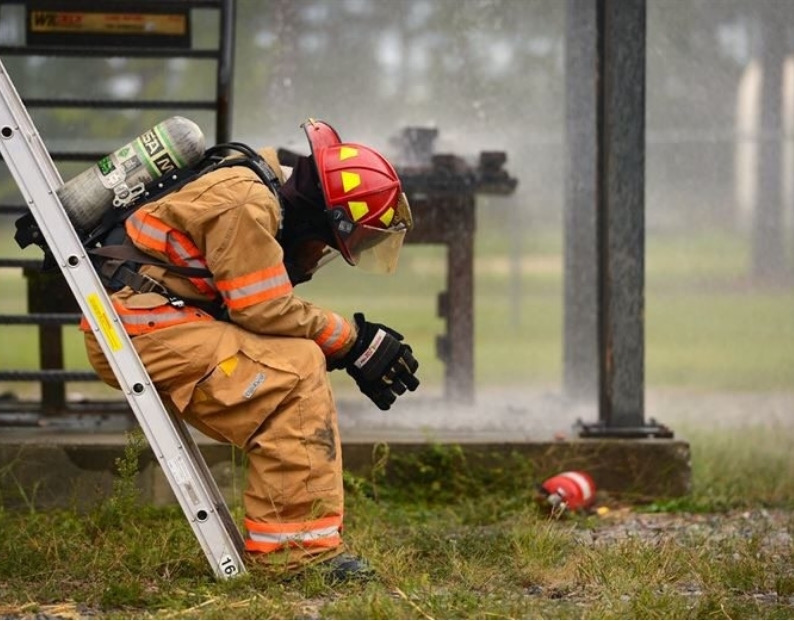
In some roles, trauma exposure is part and parcel of the work, and so is the risk. Left unchecked, it can overwhelm. Recognised and well managed, it doesn't have to.
The business case
Beyond Blue, Answering the Call: National survey of the mental health and wellbeing of police and emergency services (2018), 21,014 respondents; Safe Work Australia, Key Work Health and Safety Statistics Australia 2025 (October 2025); PwC for Beyond Blue and the National Mental Health Commission.
The risk of traumatic stress associated with vicarious trauma is one that comes from ongoing exposure - typically accumulating over months and months before anyone even notices. The people carrying it are usually the last to speak up, because coping with difficult material and traumatic experience is part of the job. Left unaddressed, it shows up as burnout, long-term stress leave and high attrition rates - and you end up losing good people you can't easily replace.
Under the Model WHS Regulations, exposure to traumatic events or material is a named psychosocial hazard, and as employers you are duty bound to identify the risk and control it so far as is reasonably practicable. If your staff do this work every day, the hazard is built into the role, and a regulator will expect to see proactive approaches to risk mitigation. Training is one of the clearest ways to demonstrate reduced risk, whilst giving your staff the skills they need to protect their wellbeing in challenging circumstances.
What participants learn
Each one is a specific, practical thing your staff can use the day after the workshop.
Understand what vicarious trauma and cumulative stress are, and how the risk arises in their own role
Recognise the signs and symptoms in themselves and in colleagues, and describe the emotional impact
Identify their own trauma response style, and where they sit on the continuum of reactions
Use a range of strategies that lower the risk, from boundaries and debriefing to sleep, exercise and how they think about the work
Draw on vicarious resilience, which is the meaning and satisfaction this work also produces
Compare formats & start the conversation
Pick the format that looks closest, tell us your numbers, and whether you are thinking onsite or online. We'll call you to talk it through and shape a quote around what your team actually needs. Tap a card to choose it. Not sure? Pick the standard option and we'll sort it out together on the call.
Every format is run in-house for your own team, at your offices or online, so we come to you. Groups of 10 to 20 work best, and this subject rewards the smaller end of that. Large-group seminar and webinar formats and short lunch and learn sessions are also available when you need to reach more of your team at once. Every format is quoted per workshop. Tell us the scope and we’ll put a written quote together.
Outcomes
How it works
Tell us team size, format and rough timing.
2 minutesA short conversation about your team, then a quote built around what you actually need.
Personalised discussionThe examples are drawn from the material your people actually handle, whether that is a caseload, a call queue or a crime scene.
1–2 weeks outAt your offices or online, by an experienced facilitator.
2 hoursWho delivers it
Associated EAP workshops are delivered by degree-qualified counsellors or registered psychologists, or adult education specialists where appropriate. Many of our facilitators also work clinically alongside their training, so the examples in the room come from real practice rather than a manual.
Associated EAP has provided employee assistance and workplace training for over 20 years. Workshops are delivered at your own offices, or online.
This workshop is run by people who do clinical work themselves, which matters here more than on most topics. Managing your own exposure to other people's trauma is a working condition of their profession too, so the strategies in the room are ones the facilitator uses rather than ones they have read about.
What participants say
“I have done many sessions relating to vicarious trauma and I found this to be the most useful in terms of what we can do practically to manage our thoughts, emotions and behaviours”
“It was helpful for us not just in terms of vicarious trauma – but in general terms of recognising stress, which we now understand creates a heightened risk of suffering these symptoms”
“We were engaged throughout the session. It was a true discussion with exercises.”
“Our facilitator created a very welcoming environment where I felt comfortable to share my thoughts”
“Vital training for journalists”
Trusted by










Common questions
Every format is quoted per workshop rather than per person, so the cost does not climb with every extra head in the room. What shapes it is the format you choose, your group size, your location, and whether you want the standard two-hour session or an immersive half or full day.
Every organisation's needs are different, which is why we don't do one-size-fits-all quotes. Tell us the scope of what you're after and we'll put together a written quote so you know exactly what you're getting before you book.
Two hours as standard, delivered in person at your premises or online over Zoom. Immersive half-day and full-day programs are also available, as are short lunch and learn sessions and large-group seminar or webinar formats.
Any role where exposure to other people's trauma is a regular and ongoing part of the job rather than a one-off event. That includes police, ambulance and rescue workers, social and community workers, child protection and family services, mental health and health staff, journalists, lawyers, and claims, complaints and contact centre teams who handle distressing material. If your people work with trauma-exposed clients, or read, watch or listen to traumatic material, they are in scope.
No, and the difference matters when you are choosing. Trauma-informed practice training is about the people you serve, so that your service does not re-traumatise them. This workshop is about your own staff, and what repeated exposure to that work does to the person doing it. The two sit well together and organisations often run both, but only one of them protects your workforce.
It is a working session rather than a lecture. Participants learn what vicarious trauma is and how it builds, then locate their own reactions on a continuum, practise the self-care strategies, and take part in a facilitated discussion where the group can share what the work is actually like. Where it helps, we explain your own employee assistance program and the critical incident support available, so people leave knowing what to reach for.
It happens, and the facilitator is a clinician, which is the main reason we run this workshop the way we do. Distress in the room is handled calmly and privately, the session keeps its shape for everyone else, and the person is pointed to real support afterwards rather than left with a phone number on a slide. If your organisation has an employee assistance program we will explain how to reach it on the day.
Anywhere from 10 to 20 participants, and this is a workshop that rewards the smaller end of that range. People will only talk about what the work costs them in a group they trust, and the facilitated discussion is where most of the value sits.
Four to six weeks is comfortable, and it gives us time to tailor the material to the work your people actually do. If something has happened and you need support sooner, call us, and ask us about critical incident response as well as training.
Often booked together
The general-purpose version of the same protective habits, for teams whose pressure is workload rather than trauma.
See the workshop →For teams who sit with loss as part of the work, and never quite know what to say.
See the workshop →For frontline staff absorbing aggression and distress from the public, where the exposure is direct rather than vicarious.
See the workshop →Tell us your team size, preferred format and rough timing. We'll call you to talk it through, then build a quote around what your team actually needs.